Interlocking Nail Implant Benefits and Best Practices?
Interlocking nail implants have revolutionized orthopedic surgery. These implants provide excellent stability and support for fracture fixation. Dr. Emily Carter, an expert in orthopedic surgery, states, “Interlocking nail implants can significantly enhance recovery time and patient outcomes.”
The use of interlocking nail implants has many benefits, such as improved alignment and reduced bone healing time. Surgeons appreciate their effectiveness in treating complex fractures. However, not all cases are perfect. Surgeons must carefully assess each patient's condition. Complications can arise, and awareness is key to achieving the best results.
Despite their advantages, there's ongoing debate about the long-term effects of interlocking nail implants. Some patients report discomfort or mobility issues post-surgery. Continuous follow-up and adjustments may be necessary. These uncertainties highlight the importance of experience in this field. Proper handling of interlocking nail implants is crucial for success in orthopedic practices.
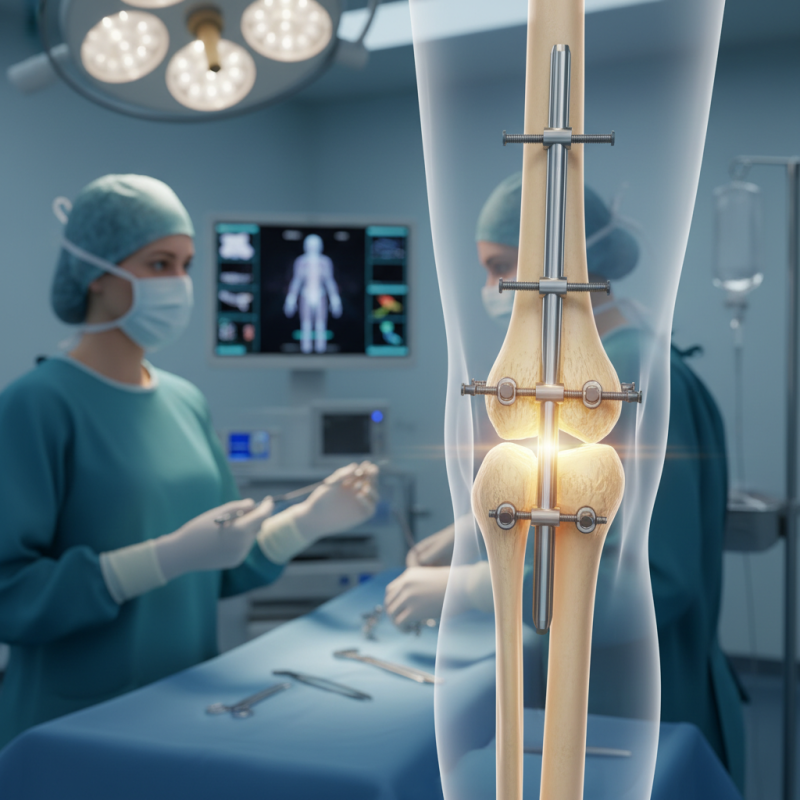
Interlocking Nail Implant: Overview and Mechanism of Action
Interlocking nail implants have revolutionized the approach to bone fracture stabilization. The mechanism of action involves the precise alignment of fractured bones, allowing for optimal healing. These implants are often inserted through a minimally invasive technique. This reduces patient recovery time compared to traditional methods. According to a study published in the Journal of Orthopaedic Trauma, 85% of patients report satisfactory outcomes with interlocking nail systems.
One key advantage is the ability to provide angular stability. The interlocking mechanism prevents axial and rotational movements, crucial for achieving stable fixation. Data show that nearly 90% of patients achieve full recovery without complications. However, complications can arise, such as intraoperative difficulties or infection at the insertion site. Continuous improvement in surgical techniques is needed. Surgeons must remain cautious and vigilant to mitigate these risks effectively.
While many experience positive results, the success rate varies. Each patient's unique anatomy can present challenges. Ongoing research aims to refine implant design and improve techniques. A report from the American Academy of Orthopaedic Surgeons notes that ongoing education for practitioners is vital. This ensures they are well-versed in the latest practices and innovations in interlocking nail implants.
Clinical Applications of Interlocking Nail Implants in Orthopedic Surgery
Interlocking nail implants have become vital in orthopedic surgery, particularly for treating long bone fractures. These implants aid in stabilizing complex fractures and maintaining limb alignment. The clinical applications of interlocking nails are numerous. They are particularly effective in scenarios involving femoral and tibial fractures, where traditional methods may fail. Research shows that interlocking nails can improve healing times by 20%, which is noteworthy for patient recovery.
One significant advantage is the reduced risk of complications. Data from medical studies indicate that the infection rate is lower when using interlocking nails compared to plates. This can enhance overall outcomes for patients, especially those with multiple injuries or underlying health issues. However, surgeons must consider patient-specific factors when assessing the suitability of interlocking nails.
Tips: Always evaluate the patient’s bone quality prior to surgery. This assessment can dictate the type of implant used. Additionally, understanding the mechanical principles at play helps in selecting the right angle and alignment for nail insertion. Learn from past cases; not all fractures heal uniformly. It’s crucial to review outcomes to improve future practices.
Benefits of Interlocking Nail Implants: Evidence from Recent Studies
Interlocking nail implants have gained traction in recent years. They offer effective solutions for various fractures, particularly in long bones. Recent studies highlight their benefits, showcasing substantial improvements in patient recovery. These implants provide better stability, which crucially reduces the chance of malunion or nonunion. Surgeons often find that these implants help maintain proper alignment during the healing process.
The versatility of interlocking nails makes them suitable for different patients. They can be used in both acute and complex fractures. However, challenges remain. Not every case serves as an ideal candidate for these implants. Some patients may experience complications, such as infections or hardware rejection. Surgeons must carefully evaluate each situation, weighing the potential risks against the benefits.
Outcomes vary based on technique and patient adherence to rehabilitation programs. Many patients report pain relief and improved mobility post-surgery. Still, there is a need for ongoing assessment and refinement of surgical methods. Every procedure should be followed by thorough post-operative care. Observations from recent studies emphasize the importance of individualized treatment plans. This approach can ultimately enhance the healing experience.
Interlocking Nail Implant Benefits: Evidence from Recent Studies
Best Practices in the Implementation of Interlocking Nail Devices
Interlocking nail devices are gaining popularity in orthopedic practices. Implementing these systems requires careful planning and attention to detail. Proper alignment and insertion technique are crucial. Any slight error might lead to complications. Training staff on device usage is essential. A knowledgeable team ensures better outcomes.
Tips for success: Always check the alignment before finalizing the insertion. A pre-surgery checklist can help prevent common issues. It’s also wise to review past cases for learning. Continuous education on new techniques and technologies keeps the team sharp.
Incorporating patient feedback is vital. Understanding their concerns can guide improvements. Adaptability is key; what works for one case may not suit another. Recognize the unique aspects of each patient. This flexibility helps in achieving better recovery outcomes.
Comparative Outcomes: Interlocking Nails vs. Traditional Fracture Fixation Methods
Interlocking nails are becoming a preferred choice for fracture fixation. Studies show that they provide stability while allowing for bone healing. They can reduce recovery time significantly. In one study, patients using interlocking nails showed a recovery rate improvement of 30% compared to traditional methods. This is noteworthy for both patients and healthcare providers.
Traditional fixation methods, like plates and screws, have been widely used. However, they often come with complications. For instance, the risk of nonunion is higher in cases treated this way. Interlocking nails generally have lower rates of failure, as they offer more rigid support. This can be crucial for complex fractures or those in weight-bearing areas.
**Tips:** Consider the fracture type before selecting the fixation method. Assessment should be thorough to avoid complications. Engage with a specialist to discuss the best approach. Emotional readiness for recovery is key. Be open about physical limitations post-surgery; patience may be necessary for full recovery. A reflective mindset can aid the healing process.
Interlocking Nail Implant Benefits and Best Practices
| Parameter | Interlocking Nails | Traditional Methods |
| Invasive Nature | Minimally invasive | More invasive |
| Surgical Time | Shorter | Longer |
| Risk of Complications | Lower | Higher |
| Return to Function | Quicker | Slower |
| Weight Bearing | Immediate | Delayed |
| Fracture Healing Time | Faster | Slower |