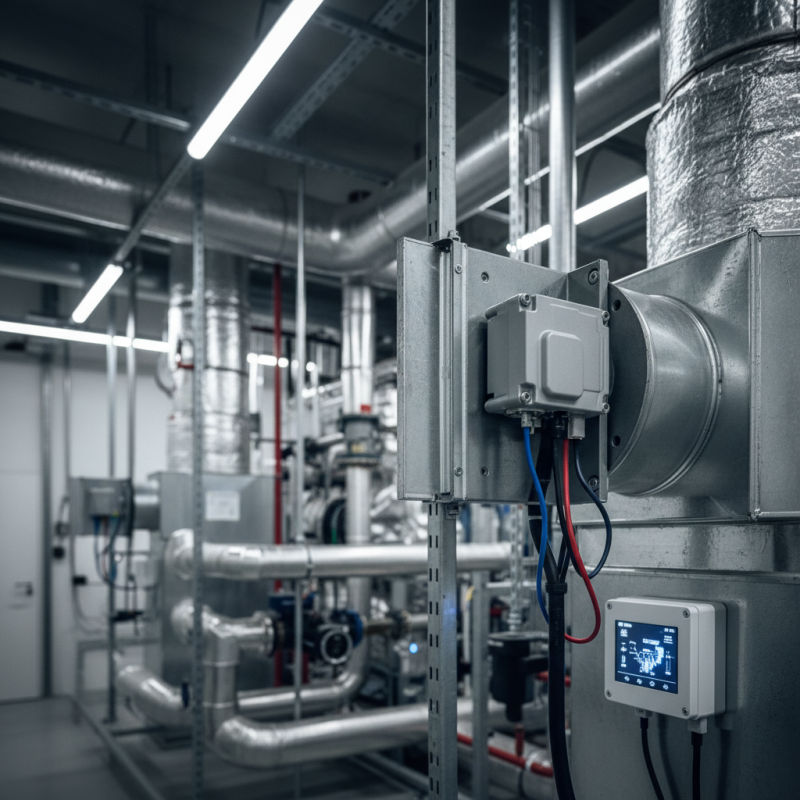
What is a Damper Actuator and How Does it Work?
A Damper Actuator plays a vital role in HVAC systems. It controls the airflow through dampers, ensuring efficiency and comfort. Understanding its function is essential for effective climate management.
The purpose of a Damper Actuator is to adjust the position of a damper. This can be automatic or manual, depending on design. An actuator responds to signals from a thermostat or controller. It opens or closes the damper based on temperature or airflow needs.
The design of a Damper Actuator can be simple or complex. Some may struggle with responsiveness. Size, placement, and calibration matter. A poorly functioning actuator can lead to energy waste. This highlights the need for regular maintenance and testing.
What is a Damper Actuator?
A damper actuator is a vital component in HVAC systems. It controls airflow, regulating temperature and maintaining energy efficiency. These devices are often overlooked, yet they play a crucial role in ensuring comfort within buildings.
Typically, damper actuators work by opening or closing air dampers based on specific signals. They receive instructions from thermostats or building management systems. According to a report by the American Society of Heating, Refrigerating and Air-Conditioning Engineers (ASHRAE), proper airflow control can lead to energy savings of up to 30%. This kind of efficiency is critical, especially as buildings consume 40% of global energy.
Many factors can impact the performance of damper actuators. Installation errors can lead to incorrect airflow. Further, environmental conditions like temperature variations may affect operation. It's essential for systems to be regularly maintained, ensuring actuators respond correctly. Monitoring and adjusting these devices can help prevent inefficiencies. Regular checks on actuator operations can lead to improved performance and cost savings.
Types of Damper Actuators and Their Applications
Damper actuators play a crucial role in HVAC systems. These devices control airflow by opening and closing dampers in response to signals. There are several types of damper actuators, each suited for different applications. Electric, pneumatic, and thermal actuators serve distinct purposes based on their operation method.
Electric damper actuators are widely used for their precise control. They can adjust airflow quickly and efficiently. In contrast, pneumatic actuators leverage compressed air to move dampers. They are often found in industrial settings where large volumes of air need management. Thermal actuators, on the other hand, are simpler devices. They use temperature changes to expand or contract, which opens or closes damper blades.
Each type has its advantages and limitations. Electric actuators can fail without proper power supply, while pneumatic systems may require regular maintenance. Sometimes, thermal actuators do not respond quickly enough in critical situations. Understanding these differences is essential for choosing the right actuator for specific needs.
Types of Damper Actuators and Their Applications
How Damper Actuators Operate Mechanically
Damper actuators play a vital role in controlling airflow in HVAC systems. They function by adjusting the position of dampers, which are used to regulate air passage. Understanding their mechanical operation can help you appreciate their importance.
These actuators typically consist of a motor, gears, and a linkage system. The motor receives commands from a control system. It then rotates gears, which move the damper blades. The blades open or close to control air volume. This process can be simple, yet it’s crucial for maintaining energy efficiency.
Tip: Regular maintenance is essential for damper actuators. Inspecting for wear and tear can prevent issues.
Sometimes, actuators can malfunction. If the motor fails, dampers may remain stuck. This can lead to uneven airflow. Checking the connections can help.
Tip: Keep a detailed log of actuator performance. Documenting issues could save time in the long run.
Proper installation matters too. Misalignment can cause jams. Always ensure that the actuator is mounted correctly. Small adjustments can make a big difference in performance.
Control Systems for Damper Actuators
In control systems for damper actuators, efficiency is key. These systems manage airflow and temperature in HVAC setups. They adjust dampers based on sensor readings. This ensures optimal performance. Sometimes, communication errors occur between sensors and actuators. Such issues can lead to incorrect damper positions. Regular maintenance is essential in preventing these problems.
Tips: Regularly check the sensors. Clean any dust or debris. This ensures accurate measurements.
The integration of control systems must consider different environments. Not all spaces require the same logic. It’s important to tailor the system to specific needs. Overly complex systems may introduce complications. Simplicity often leads to greater reliability. Keep an eye on system behavior. Look for any unusual patterns.
Tips: Use diagnostic tools to monitor performance. Early detection saves time and costs.
Balancing automation with manual overrides is crucial. While automation boosts efficiency, manual controls offer flexibility in emergencies. Users must feel confident in using both methods. Testing the system periodically can enhance understanding. Empower users to engage with the technology.
Benefits of Using Damper Actuators in HVAC Systems
Damper actuators play a crucial role in HVAC systems. They control airflow and maintain temperature efficiently. According to the U.S. Department of Energy, inefficient air control can lead to increased energy costs by up to 30%. This highlights the importance of effective airflow regulation.
Using damper actuators can significantly reduce energy consumption in HVAC systems. Studies show that properly installed actuators can lower energy use by up to 15%. They enhance system responsiveness and improve temperature consistency throughout buildings. However, many installations still rely on outdated systems, leading to waste and inefficiency.
Efforts to optimize HVAC efficiency with damper actuators can sometimes be overlooked. In a recent analysis, over 40% of surveyed buildings reported underutilizing existing actuator technology. This presents an opportunity for improvement. Investing in modern damper actuators can lead to better energy savings and enhanced air quality. It is essential to revisit existing systems for potential upgrades and greater efficiency.
What is a Damper Actuator and How Does it Work? - Benefits of Using Damper Actuators in HVAC Systems
| Aspect | Description |
| Definition | A device that controls the flow of air in HVAC systems by adjusting the position of dampers. |
| Types | Electronic, Pneumatic, and Manual Damper Actuators. |
| Functionality | Converts control signals into mechanical movement to adjust damper blades. |
| Benefits | Improves energy efficiency, enhances control over air distribution, and increases system reliability. |
| Applications | Used in commercial buildings, residential systems, and industrial HVAC applications. |
| Installation | Can be mounted on various types of dampers and integrated into existing HVAC systems. |
| Maintenance | Regular checks for proper calibration, response time, and mechanical integrity are recommended. |