How to Choose the Right Ball Bearing for Your Project?
Choosing the right Ball Bearing is crucial for your project's success. Ball bearings play a significant role in reducing friction and wear in mechanical systems. A report by MarketsandMarkets estimates that the global ball bearing market will reach over $76 billion by 2025. This indicates the industry's growth and the rising demand for high-quality components.
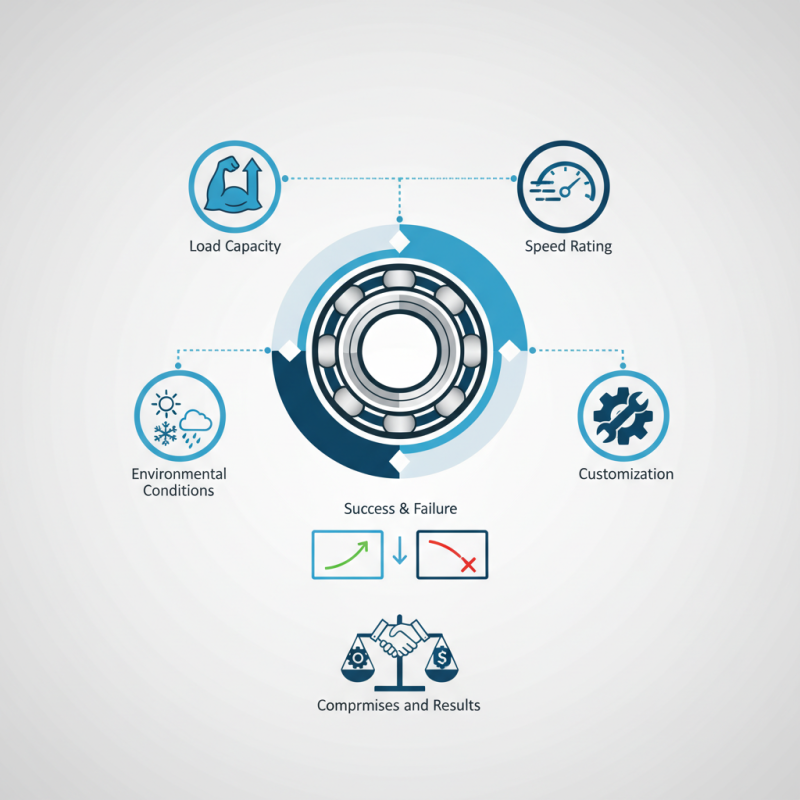
Understanding the factors that influence your choice is essential. Consider load capacity, speed rating, and environmental conditions. A ball bearing that meets one requirement may not be suitable for another. Customization can sometimes lead to unexpected challenges. For instance, modifying a bearing for specific applications may affect its longevity.
It is important to acknowledge that not every bearing will perform flawlessly. Many professionals encounter failures due to improper selection. Understanding the intricacies of various ball types can help avoid these issues. Evaluation of the supplier's craftsmanship is equally important. A well-chosen ball bearing can enhance performance, but remember that compromises may lead to drawbacks. Choose wisely for the best results.
Understanding Different Types of Ball Bearings and Their Applications
When selecting ball bearings for your project, it's essential to understand the different types available. These ball bearings can significantly affect performance. For example, deep groove ball bearings are versatile and suitable for high speeds. They are commonly found in household appliances like washing machines. On the other hand, angular contact ball bearings handle axial loads better. They excel in applications like motors and pumps.
Another vital type is the self-aligning ball bearing. It compensates for misalignment. This feature is useful in textile machinery where slight misalignments are common. The needle roller bearing stands out due to its compact design. It supports heavy loads in limited spaces, making it ideal for automotive applications. However, they offer less shock resistance. Not every type suits every project. Considering your specific needs is crucial. Misjudgments can lead to project delays or failures. Understanding each type allows for better and more informed decisions in your bearing selection.
Evaluating Load Capacity and Speed Ratings for Your Project Needs
When evaluating load capacity and speed ratings for ball bearings, consider the specific requirements of your project. Load capacity refers to how much weight a bearing can handle. Look at both radial and axial load ratings. Underestimating load can lead to failures. Always check the manufacturer's specifications to ensure your choices align with your project needs.
When it comes to speed ratings, consider the operating environment. Higher speeds can generate heat. Excessive heat may damage bearings or reduce their lifespan. Be cautious; the fastest option might not always be the best. Find a balance between speed and load handling capability.
Tips: Always account for misalignment and mounting errors. Small deviations may affect performance. Consider using a higher load capacity than needed to ensure reliability. Also, don't forget to factor in environmental conditions, such as temperature and humidity. These elements could influence both load capacity and speed ratings over time.
Material Selection: Choosing the Right Ball Bearing Construction
Choosing the right material for ball bearings is crucial for any project. Different materials offer various advantages and limitations. Steel bearings are common due to their strength. However, they may rust if not properly maintained. Stainless steel is more resistant to corrosion but can be more expensive.
Plastic ball bearings are lighter and can be used in environments where metal is unsuitable. Yet, they may not withstand heavy loads. Ceramic bearings offer excellent durability and low friction. Still, they might be brittle and require careful handling.
Think about the specific conditions your bearings will face. Temperature, load, and moisture levels all play a role. It’s important to evaluate your needs thoroughly. If you choose hastily, you might face issues later on. Reflect on your choices carefully.
Assessing Environmental Factors Affecting Bearing Performance
When selecting ball bearings for a project, environmental factors are crucial. Humidity can significantly impact bearing performance. According to a recent study by the International Journal of Mechanical Engineering, bearings in high humidity environments can experience corrosion. This corrosion can lead to a failure rate increase of up to 30%.
Temperature fluctuations also play a critical role. Bearings can expand or contract, affecting their fit and operation. The same study noted that a 10°C increase in temperature can reduce bearing lifespan by 50%. This is particularly concerning for projects located in extreme climates.
Contamination from dust or chemicals is another environmental aspect to consider. A report by the Society of Tribologists and Lubrication Engineers highlights that contaminants can reduce bearing effectiveness. They can lead to increased friction and potential failure. Many projects overlook this factor, assuming it won’t impact performance.
Proper seals and maintenance are essential to mitigate these issues. Choosing the right bearing without considering these factors may lead to unexpected failures and increased long-term costs.
Key Factors: Size, Precision, and Maintenance Requirements in Selection
Choosing the right ball bearing for your project involves understanding key factors. Size is crucial. It influences load capacity and fit. Too large, and it might not fit the assembly. Too small, and it may not handle the necessary load. Measure your application precisely. A slight error can lead to performance issues.
Precision is another vital factor. Bearings come in various grades. High-precision bearings reduce friction, but they are costlier. For basic applications, standard grades might suffice. Consider the tolerance levels your project requires. Too loose or too tight might lead to premature failure.
Maintenance requirements also matter. Some bearings need regular lubrication. Others are sealed and require less attention. Think about the environment too. Dust or moisture can affect performance. Be honest about your capability to maintain the bearings. In some cases, a more durable bearing may save you time and effort in the long run.