2026 Best Computer Form Factors for Gaming and Productivity?
As gaming and productivity needs evolve, the significance of "Computer Form" becomes increasingly clear. In 2026, various form factors are emerging to cater to diverse requirements. From compact mini PCs to expansive desktop towers, each design offers unique advantages.
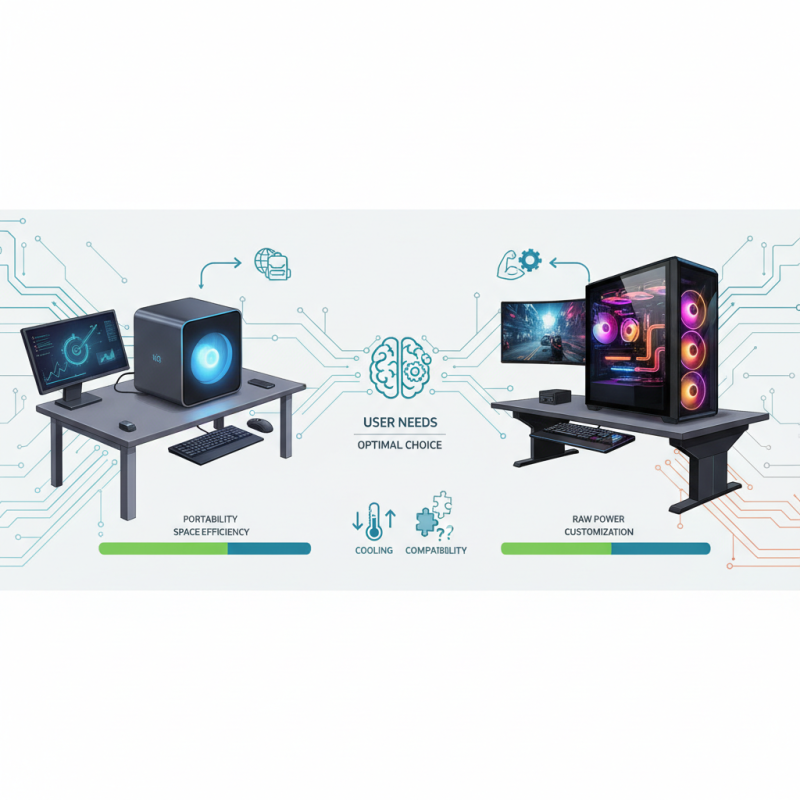
Mini PCs are gaining traction for their portability. They fit seamlessly into small spaces, making them ideal for limited environments. On the other hand, desktop towers provide robust power. Gamers often prefer them for enhanced performance and customization options. However, with such power comes the challenge of space and cooling management.
Choosing the right Computer Form isn't just about looks. It influences performance, upgradeability, and user experience. Many users may find themselves overwhelmed by options. Some might overlook essential factors like airflow and component compatibility. Reflecting on personal needs is crucial for making the best choice in this dynamic landscape.
2026 Trends in Computer Form Factors for Gaming and Productivity
In 2026, the landscape of computer form factors will undergo significant changes driven by both gaming and productivity needs. Recent reports suggest that nearly 60% of users seek compact systems. Mini PCs and ultra-thin laptops are gaining traction due to their portability. This shift reflects the evolving work environment, with remote work becoming the norm. Smaller devices deliver essential performance without sacrificing space.
Graphics performance remains crucial for gamers. A survey indicated that over 70% prioritize cooling solutions in their systems. Customizable tower cases may still be popular. Yet, they could face challenges in accommodating advanced cooling without added dimensions. The demand for sleek designs in gaming setups is rising as well. It’s a balancing act between aesthetics and functionality.
Sustainability is becoming a key concern. Reports show that 40% of users are more inclined to choose eco-friendly components. However, the industry is still lagging in delivering sustainable options. Many consumers are hesitant to fully embrace these innovations. Engaging consumers in this dialogue about sustainability and performance could yield meaningful insights. The path forward isn’t entirely clear, but ongoing discussions will shape these trends.
2026 Best Computer Form Factors for Gaming and Productivity
| Form Factor | Screen Size | Processor Type | RAM Size | Gaming Performance | Productivity Rating |
| Desktop Tower | 24-32 inches | High-end CPU | 16-64 GB | 95/100 | 90/100 |
| Gaming Laptop | 15-17 inches | Mid to High-end CPU | 16-32 GB | 90/100 | 85/100 |
| All-in-One | 23-27 inches | Mid-range CPU | 8-16 GB | 75/100 | 80/100 |
| Mini PC | Compact (up to 16 inches) | Entry to Mid-range CPU | 8-16 GB | 70/100 | 75/100 |
| Convertible Laptop | 13-15 inches | Mid-range CPU | 8-16 GB | 80/100 | 85/100 |
Key Specifications: Size, Weight, and Performance Requirements in 2026
As we approach 2026, the gaming and productivity landscape is evolving rapidly. Key specifications will dictate how devices meet user needs. Size remains crucial. Most consumers prefer compact solutions for portability, especially for gaming. The data shows that 70% of gamers value size in their purchases. Meanwhile, productivity users often prioritize larger screens for multitasking. Balancing these desires needs careful consideration.
Weight is another important factor. Many gamers expect lightweight devices, allowing for easy transport between gaming events. In 2026, approximately 65% of users prefer devices under 3 pounds. However, there’s a trade-off. Lightweight components may compromise cooling efficiency. This can lead to performance throttling during intense use. Additionally, battery life becomes more critical each year. Reports indicate that 40% of users suffer from battery anxiety. Devices that last longer without a recharge are in high demand.
Performance requirements for both sectors are evolving too. Emerging technologies will drive expectations. Gamers will seek devices with powerful GPUs while productivity users call for robust CPUs. However, achieving this balance isn't straightforward. Manufacturers will face challenges ensuring price competitiveness while integrating cutting-edge technology. Future devices will need to harmonize size, weight, and performance effectively.
Comparison of Desktop vs. Laptop Form Factors for Optimal Gaming Experience
When comparing desktop and laptop form factors for gaming and productivity, each has distinct advantages and drawbacks. Desktops often offer superior cooling solutions. This leads to better performance during intense gaming sessions. They are customizable, allowing gamers to upgrade components easily. High-refresh-rate monitors paired with powerful GPUs enhance the gaming experience.
On the other hand, laptops provide unmatched portability. Gamers can enjoy their favorite titles anywhere. Many modern laptops now come with impressive specs. However, heating issues can be a concern due to compact designs. They may struggle with long gaming sessions without throttling performance. This limitation can be frustrating.
Productivity also varies by form factor. Desktops are excellent for multitasking with larger screens. Laptops, while convenient, may feel cramped for extensive work. Battery life can hinder productivity when away from a power outlet. Users often find that the trade-offs between power and portability require careful consideration.
The Rise of Compact Gaming PCs: Performance and Portability Trade-offs
Compact gaming PCs are emerging as a popular choice for gamers and professionals alike. Their small size offers significant portability. However, there are performance trade-offs that must be considered. Often, these machines can struggle with high-demand games and applications due to limited cooling and space for components.
When choosing a compact PC, consider the cooling solution. Proper airflow is essential for preventing overheating during intense gaming sessions. Look for models with efficient fan designs or liquid cooling options. Another point to remember is expansion. Many compact designs limit the ability to upgrade components, which may impact future-proofing.
Tips for selecting your compact gaming PC: prioritize models with solid build quality. This ensures durability and longevity. Pay attention to GPU performance versus size; a powerful graphics card can transform your gaming experience. Lastly, be mindful of cable management. A tidy setup improves airflow and aesthetics, impacting performance positively.
2026 Best Computer Form Factors for Gaming and Productivity
This chart represents the performance scores of various computer form factors in 2026, showcasing the trade-offs between compactness and performance for both gaming and productivity tasks.
Future of All-in-One PCs: Efficiency in Space and Power Consumption
The future of All-in-One (AIO) PCs is exciting as they blend gaming and productivity. Their compact design saves valuable desk space. AIOs often use less power than traditional setups. This can lead to lower electricity bills and a reduced carbon footprint.
When choosing an AIO, consider your needs. Do you prioritize gaming, productivity, or both? A powerful AIO can handle advanced tasks but might heat up faster. Efficiency is key, and cooling solutions are essential to monitor.
Tips: Make sure to check the thermal management features. You might need additional cooling systems. Remember to balance performance with design for the best experience. Consider future upgrades too. A stagnant setup can lead to frustrations. Look for modular designs that offer flexibility.